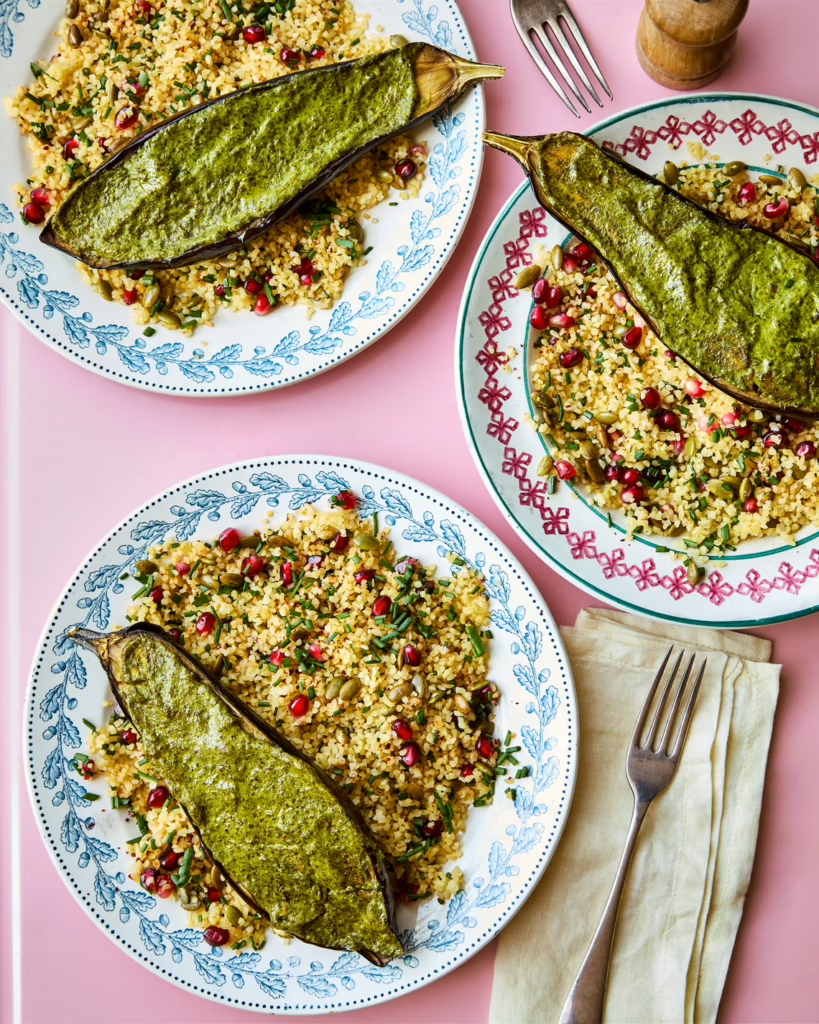
Aubergines with green tahini crust and cracked wheat pilaf
Lorem ipsum dolor sit amet, consectetur adipiscing elit. Suspendisse ac libero augue. Donec vitae orci eget nunc faucibus faucibus. Duis erat est, efficitur nec metus id, luctus dapibus augue. Nunc faucibus enim velit, at suscipit mi tincidunt ut. Nam porttitor, erat in ultrices tempor, arcu enim condimentum diam, quis euismod ipsum velit sit amet ante.
Prep 10 min
Cook 1 hr
Serves 6
For the aubergines
3 aubergines, halved lengthways
3 tbsp olive oil
Flaky sea salt and black pepper
For the tahini crust
50g mixed fresh herbs – basil, coriander or/and flat-leaf parsley
1 garlic clove, peeled
Finely grated zest and juice of 1 unwaxed lemon
A pinch of salt
80g tahini paste
For the cracked wheat pilaf
350g cracked wheat
1 tbsp olive oil
1 tsp salt
60g toasted pumpkin seeds
80g pomegranate seeds
1 tsp pul biber, or aleppo chilli flakes
20g chives, finely chopped
Heat the oven to 220C (200C fan)/425F/gas 7. Score the flesh of the halved aubergines in a crisscross pattern (don’t cut right through to the skin), then put on a lined baking sheet and brush generously with the olive oil. Sprinkle with salt and pepper, then roast for 35-40 minutes, until the flesh is soft and golden.
Put the herbs and garlic in a small food processor and blitz until they’re all chopped up. Add four tablespoons of cold water, the lemon zest and juice, and the salt, and blitz again to make a smooth liquid. Add the tahini and blitz one last time, until the mix has a smooth consistency.
Dollop a large spoonful of the tahini mix on the cut surface of each aubergine half, spread to cover, then return the aubergines to the hot oven for 10 minutes, to set the crust.
Meanwhile, bring 500ml water to a boil in a large saucepan, add the cracked wheat, oil and salt, bring back to a boil, then take off the heat. Cover the pan with clingfilm and leave to stand for 15 minutes while the wheat absorbs the water. Remove the clingfilm, add the pumpkin seeds, pomegranate seeds, chilli flakes and chives to the softened wheat, and stir well to combine.
Serve each crusted aubergine half on top of a mound of the warm cracked wheat pilaf.
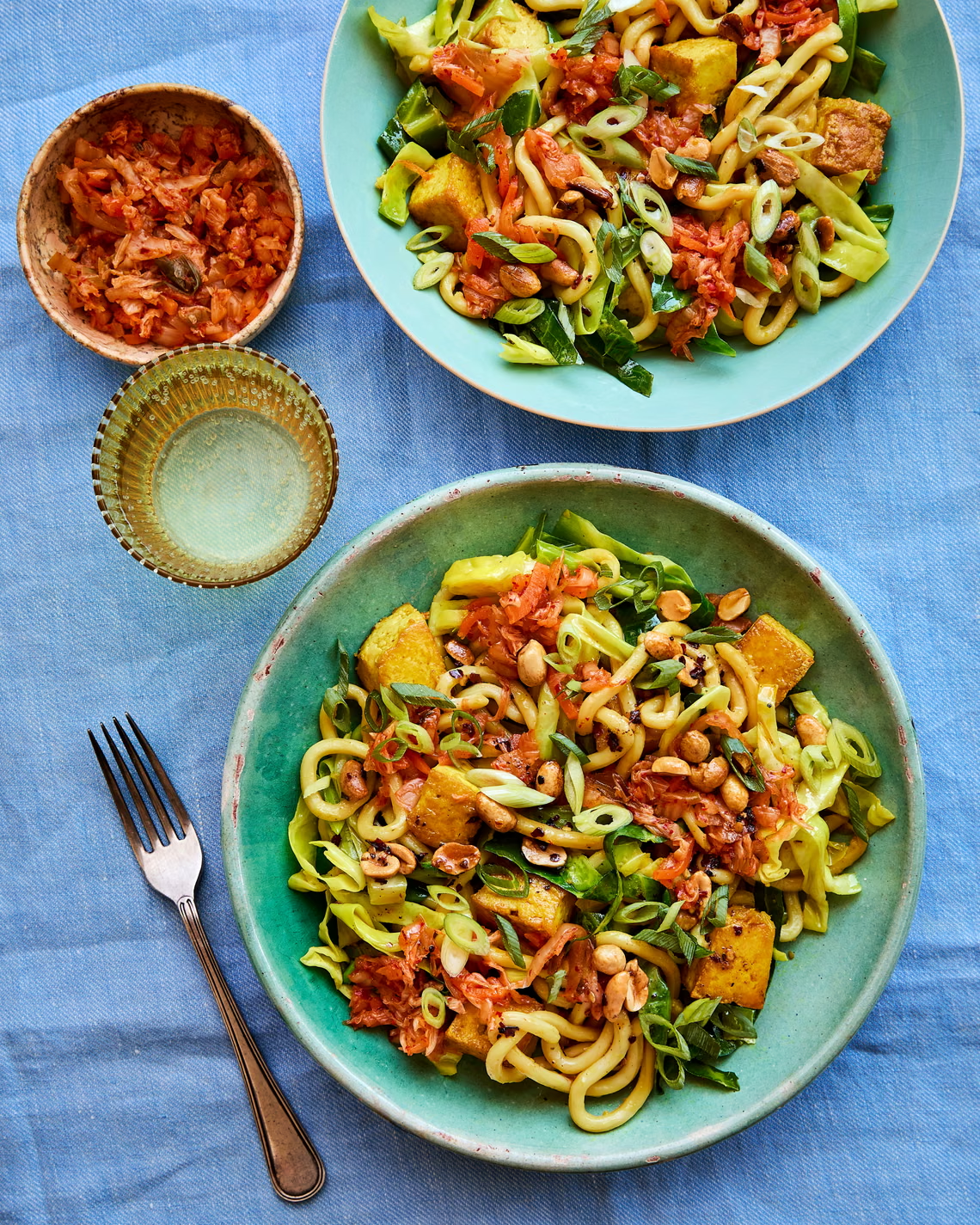
Kimchi tofu noodles with chilli peanuts
Lorem ipsum dolor sit amet, consectetur adipiscing elit. Donec malesuada nulla erat, eu iaculis dolor scelerisque eu. Pellentesque arcu magna, euismod quis tristique id, tempus et nisl. Etiam quis nulla augue. Morbi sed ante at arcu mollis luctus. Suspendisse sit amet gravida dui. Vestibulum interdum ante pretium, laoreet nibh feugiat, vehicula eros. Phasellus vel ipsum quis diam placerat pretium in id ante.
Prep 15 min
Cook 15 min
Serves 4
2 tbsp sesame or neutral oil
2 garlic cloves, peeled and finely grated
3cm ginger, peeled and finely grated
280g firm tofu, cut into 1½cm cubes
½ tsp ground turmeric
1 tsp sea salt flakes,plus extra to taste
½ sweetheart cabbage, cut into ½cm-thick slices
2 150g packets straight-to-wok udon
2 tbsp soy sauce
For the chilli peanuts
1 tbsp butter, or sesame oil
40g salted peanuts
½ tsp chilli flakes
For the topping
2-4 tbsp kimchi, finely chopped
2 spring onions,trimmed and finely sliced
Put the oil in a large frying pan on a low heat, add the garlic and ginger, and stir-fry for 30 seconds. Add the tofu, stirring gently to coat it in the oil, then turn up the heat to medium and fry the tofu for two minutes. Flip the cubes and fry on the other side for another two minutes, until lightly golden brown.
Add the turmeric and salt, stir-fry for another minute, then scatter in the sliced cabbage. Add two tablespoons of boiling water, then cover and leave to steam for three minutes.
Meanwhile, melt the butter in a small frying pan, add the peanuts and fry for a minute. Stir in the chilli flakes, take off the heat and leave to cool.
Add the noodles to the cabbage and tofu pan, and gently stir-fry for two minutes, until the noodles are cooked through. Add the soy sauce, stir well, then taste and add salt, if required.
Divide the noodles and tofu between four bowls, then top with the kimchi, chilli peanuts and sliced spring onions. (Alternatively, make up just two bowls, and save the rest for lunch the next day.)
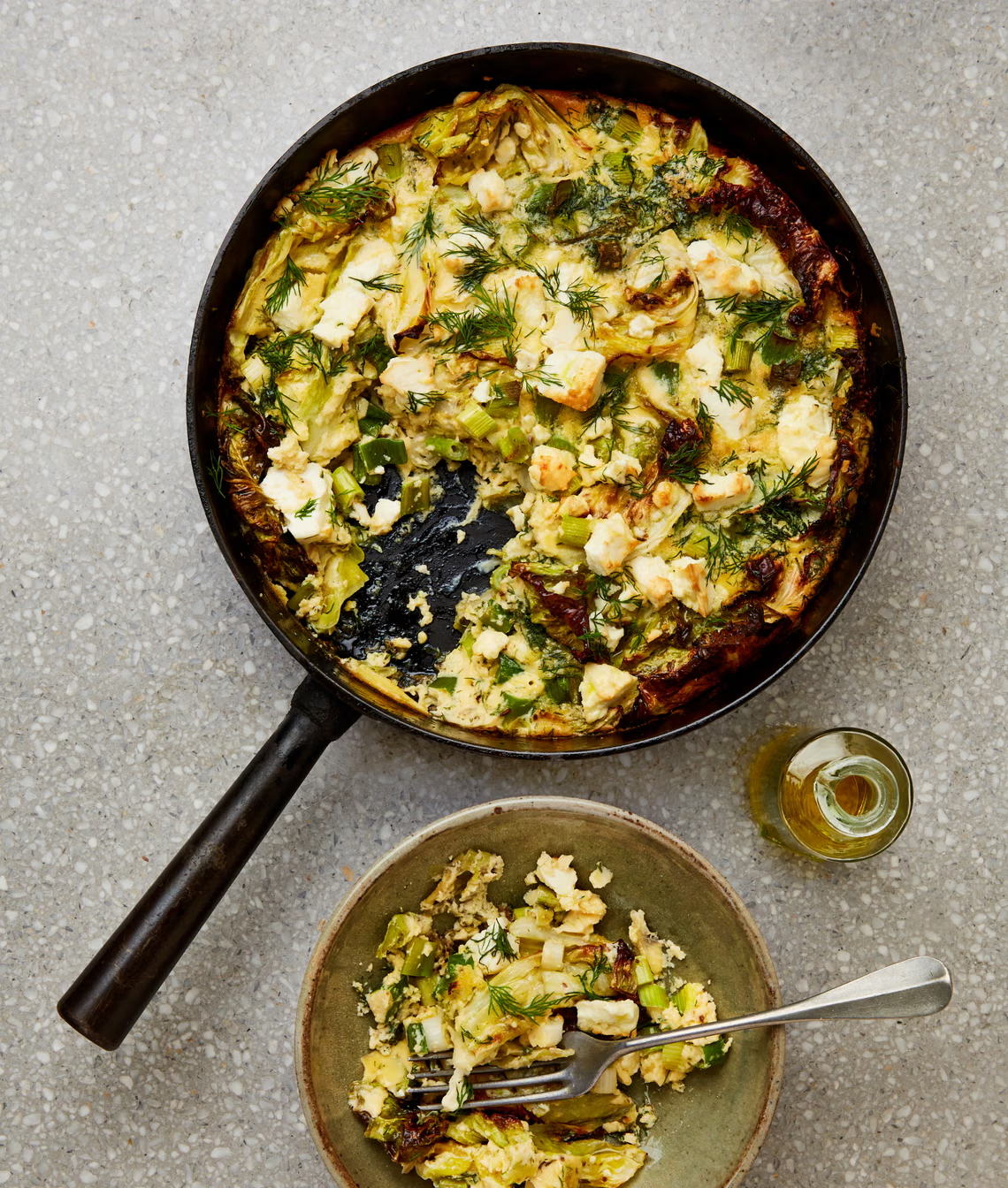
Herby cabbage pudding with feta
Lorem ipsum dolor sit amet, consectetur adipiscing elit. Suspendisse ac libero augue. Donec vitae orci eget nunc faucibus faucibus. Duis erat est, efficitur nec metus id, luctus dapibus augue. Nunc faucibus enim velit, at suscipit mi tincidunt ut. Nam porttitor, erat in ultrices tempor, arcu enim condimentum diam, quis euismod ipsum velit sit amet ante.
Prep 20 min
Cook 40 min
Serves 4
1 large hispi cabbage (500g), cut in half, core and tough stems removed
2 tbsp olive oil, plus extra for drizzling
Fine sea salt and black pepper
1 tsp caraway seeds, lightly crushed in a mortar
10g dill, finely chopped, plus 1 tsp extra to finish
5 spring onions (60g), trimmed and cut into 1cm-thick slices
50ml whole milk
50g Greek yoghurt
150ml double cream
50g unsalted butter
25g plain flour
3 eggs plus 1 egg yolk
80g feta
Heat the oven to 220C (200C fan)/425F/gas 7. Separate the cabbage leaves, put them in a large bowl and mix with the olive oil and a half-teaspoon of salt. Pile the cabbage into a 24cm ovenproof pan and roast for five minutes.
Using tongs or two long-handled wooden spoons, give the cabbage a stir, then roast for another five minutes. Stir in the caraway seeds, roast for five minutes more, until the cabbage is wilted and charred in places, then take the pan out of the oven and turn it down to 190C (170C fan)/375F/gas 5. Arrange the leaves so some of them poke out at the top, then scatter over the dill and spring onions.
Put the milk, yoghurt, cream, butter, flour, whole eggs, egg yolk, a quarter-teaspoon of salt and a good grind of pepper in a blender, and blitz smooth. Pour this mix all over the cabbage and herbs, crumble the feta on top and return to the oven for 25 minutes, until the top is golden in patches and set. Scatter the reserved picked dill on top, drizzle over some olive oil, and serve hot.
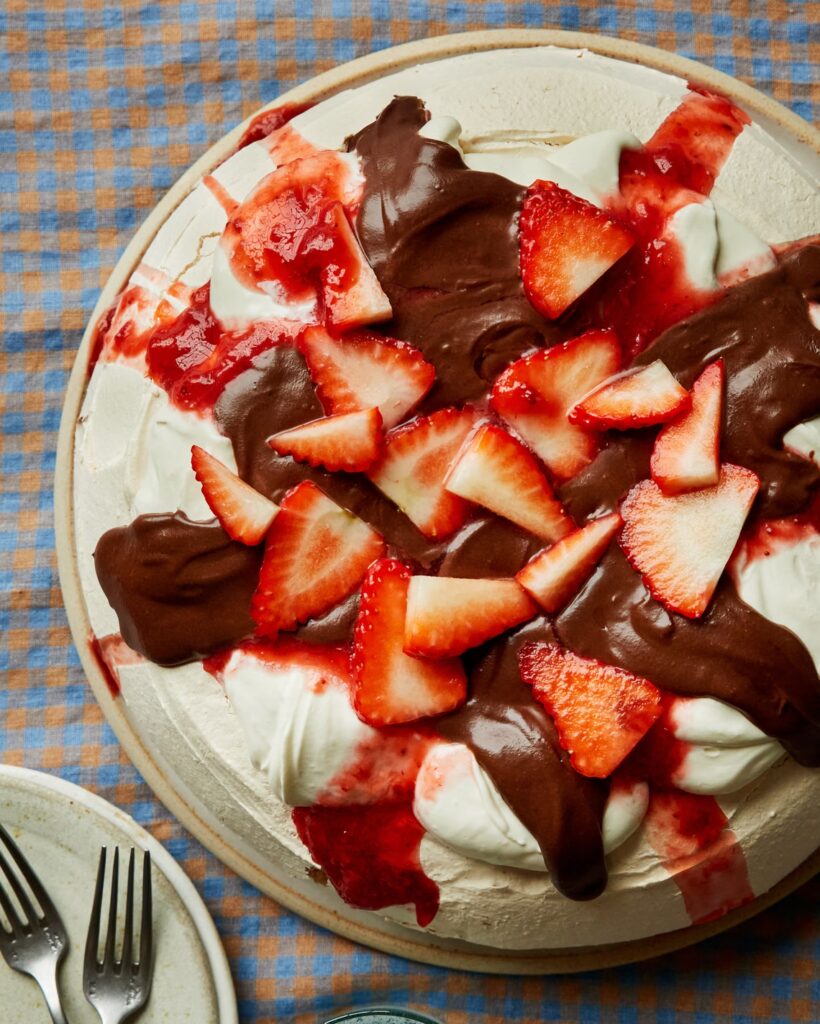
Neapolitan pavlova
Lorem ipsum dolor sit amet, consectetur adipiscing elit. Suspendisse ac libero augue. Donec vitae orci eget nunc faucibus faucibus. Duis erat est, efficitur nec metus id, luctus dapibus augue. Nunc faucibus enim velit, at suscipit mi tincidunt ut. Nam porttitor, erat in ultrices tempor, arcu enim condimentum diam, quis euismod ipsum velit sit amet ante.
Prep 10 min
Cook 4 hr 15 min
Cool 2 hr+
Serves 8-10
200g egg whites (from about 6 large eggs), at room temperature
350g granulated sugar
1½ tbsp cornflour
35g strawberry Nesquik powder
1½ tsp distilled white vinegar
1 tsp sea salt
Strawberries, for decorating (optional)
For the chocolate fudge sauce
227gdouble cream
90g soft light brown sugar
¼ tsp sea salt
55g dark chocolate (60-70%), roughly chopped
50g Dutch-process cocoa powder
1 tsp vanilla extract
For the vanilla cream cheese whip
135g cream cheese, at room temperature
2 tbsp icing sugar
1 tsp vanilla extract
227gdouble cream
¼ tsp sea salt
275g strawberry compote
Heat the oven to 110C (90C fan)/225F/gas ¼, and line a baking sheet with greaseproof paper.
In a stand mixer fitted with the whisk attachment, beat the egg whites on medium speed for about eight minutes, until they form soft peaks. With the motor running, gradually stream in the granulated sugar, then turn up the speed to medium-high and whisk for 10-15 miuntes, until the mix forms stiff, glossy peaks.
Add the cornstarch, Nesquik powder, vinegar and salt, mix until incorporated, then dollop the meringue in a 25cm disc on to the lined baking sheet. Use a bench scraper to smooth the sides, then scoop out a cup of the meringue from the centre to create a generous divot; use the meringue in the cup to reinforce the sides.
Bake for three and a half to four hours, until the meringue is very crisp, then turn off the oven and leave the meringue inside with the door closed for two to three hours, until cool. Store in an airtight container for up to five days.
To make the sauce, in a small pan on a medium heat mix the cream, brown sugar and salt, and bring to a simmer. Take off the heat, add the dark chocolate and cocoa, and whisk smooth. Return to a low heat and cook, whisking constantly, for a minute. Stir in the vanilla, then remove and leave to cool. Store the sauce in an airtight container in the fridge for up to a week. Warm it gently until smooth before using.
To make the cream cheese whip, in a stand mixer fitted with the paddle attachment, beat the cream cheese, icing sugar and vanilla on medium-high speed until smooth. Add the cream and salt, switch out the paddle attachment for the whisk, then beat on medium for about four minutes, until the mix forms medium peaks.
Spoon half the fudge sauce into the indent in the meringue, then smooth it out. Dollop the cream cheese whip on top, then cover with strawberry compote and decorate with fresh strawberries, if using. Drizzle with the remaining fudge sauce, cut into slices and serve immediately.
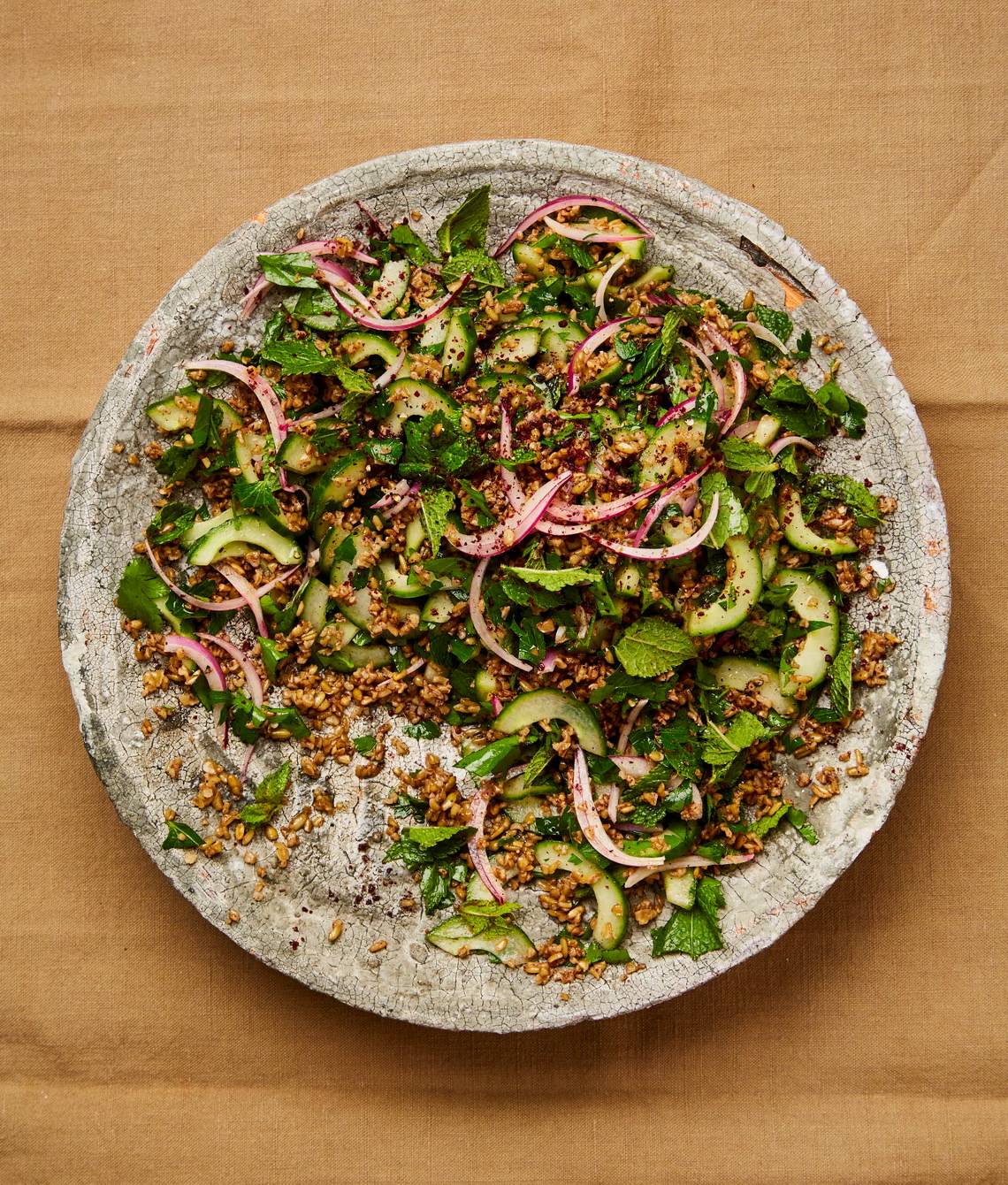
Tabbouleh
Lorem ipsum dolor sit amet, consectetur adipiscing elit. Suspendisse ac libero augue. Donec vitae orci eget nunc faucibus faucibus. Duis erat est, efficitur nec metus id, luctus dapibus augue. Nunc faucibus enim velit, at suscipit mi tincidunt ut. Nam porttitor, erat in ultrices tempor, arcu enim condimentum diam, quis euismod ipsum velit sit amet ante.
Prep 15 min
Cook 35 min
Cool 30 min
Serves 4 as a side
75ml olive oil
4 garlic cloves, peeled and crushed
150g cracked freekeh
¾ tsp ground allspice
½ tsp ground cinnamon
Salt and black pepper
1½ cucumbers (500g), deseeded and cut into ¼cm-thick half-moons (350g net weight)
1 small red onion, peeled and very thinly sliced
2 tbsp cider vinegar
30g parsley leaves, roughly chopped
20g mint leaves, roughly torn
2 tbsp lemon juice
1 tsp sumac
Put a tablespoon and a half of the oil in a medium saucepan on a medium-high heat. Add the garlic and cook for about 90 seconds, until lightly coloured, then add the freekeh, allspice and cinnamon, and cook, stirring constantly, for 30 seconds more. Add 270ml water, half a teaspoon of salt and a good grind of black pepper. Bring to a boil, cover, turn the heat to low and cook for 15 minutes. Turn off the heat, then leave to sit, still covered, for another 15 minutes. Remove the lid and leave for about 30 minutes, to cool completely.
Put the cucumber, onion, vinegar and an eighth of a teaspoon of salt into a large bowl and toss to combine. Leave to pickle for about 20 minutes, then add the cold freekeh, herbs, lemon juice, remaining three and a half tablespoons of oil, half a teaspoon of salt and a good grind of black pepper. Mix well, then transfer to a platter. Sprinkle with the sumac and serve.
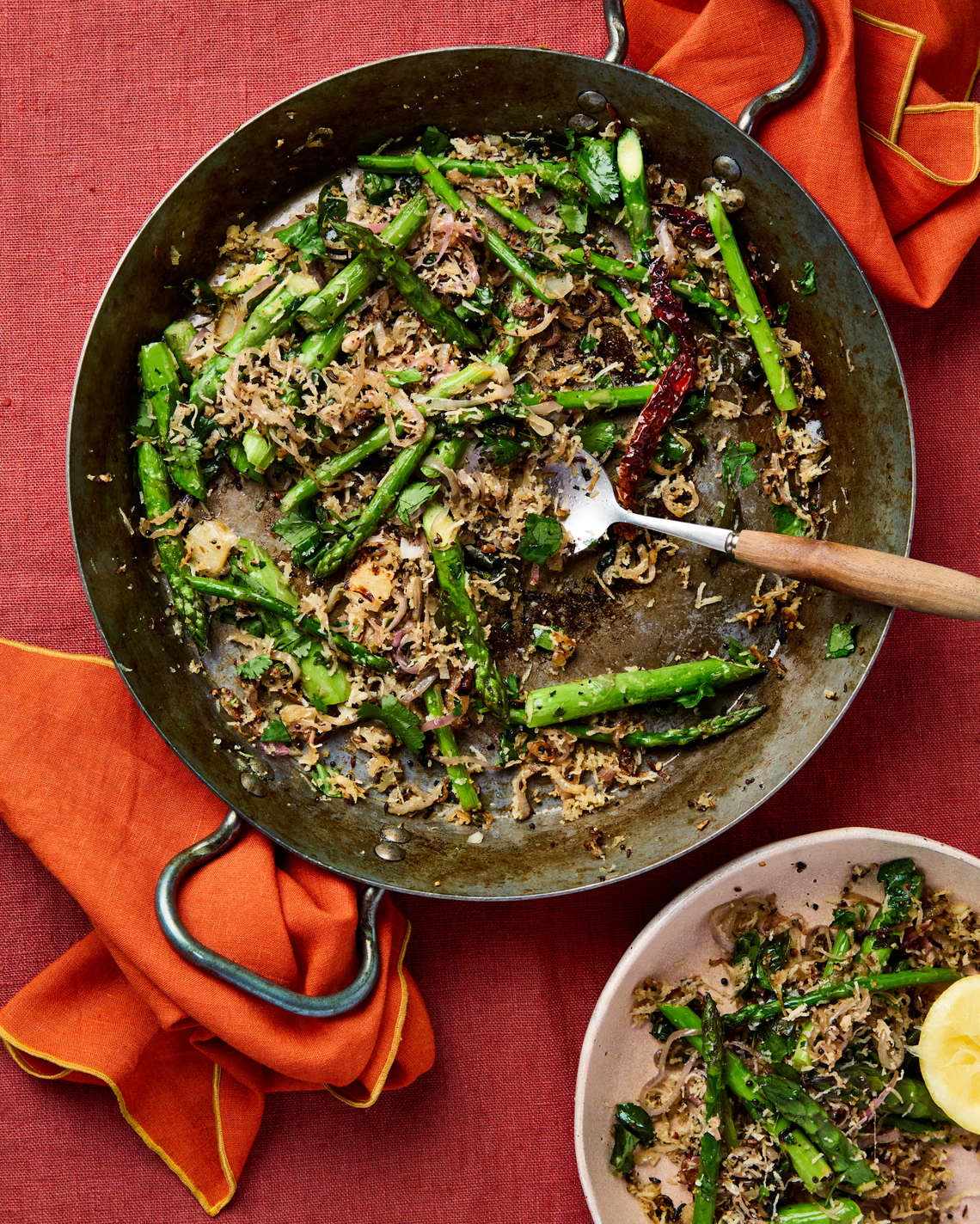
Asparagus Stir-Fry
Lorem ipsum dolor sit amet, consectetur adipiscing elit. Suspendisse ac libero augue. Donec vitae orci eget nunc faucibus faucibus. Duis erat est, efficitur nec metus id, luctus dapibus augue. Nunc faucibus enim velit, at suscipit mi tincidunt ut. Nam porttitor, erat in ultrices tempor, arcu enim condimentum diam, quis euismod ipsum velit sit amet ante.
Prep 10 min
Cook 15 min
Serves 4
30ml sunflower oil
1½ tsp black mustard seeds
1 tsp cumin seeds
2 dried red chillies
10 fresh curry leaves
2 medium banana shallots, peeled and thinly sliced
2 green chillies (bird’s eye or similar), chopped
250g asparagus, woody ends cut off and discarded, spears cut in half widthways
1 tsp salt
1 tsp crushed black peppercorns
50g grated fresh coconut
1 tsp fresh lemon juice
1 small handful coriander leaves, roughly chopped
Put the oil in a wide pan set over a medium heat. Once it’s hot, add the mustard and cumin seeds, the whole dried chillies and the curry leaves, cook for 30 or so seconds, until they all start to sizzle and smell fragrant, then add the sliced shallots and green chillies, and cook, stirring, for three minutes.
Add the asparagus, stir-fry for two minutes, then sprinkle in the salt and pepper. Add the grated coconut and cook, stirring, for another three minutes, until well combined.
Take off the heat, stir in the lemon juice and chopped coriander, and serve at once.
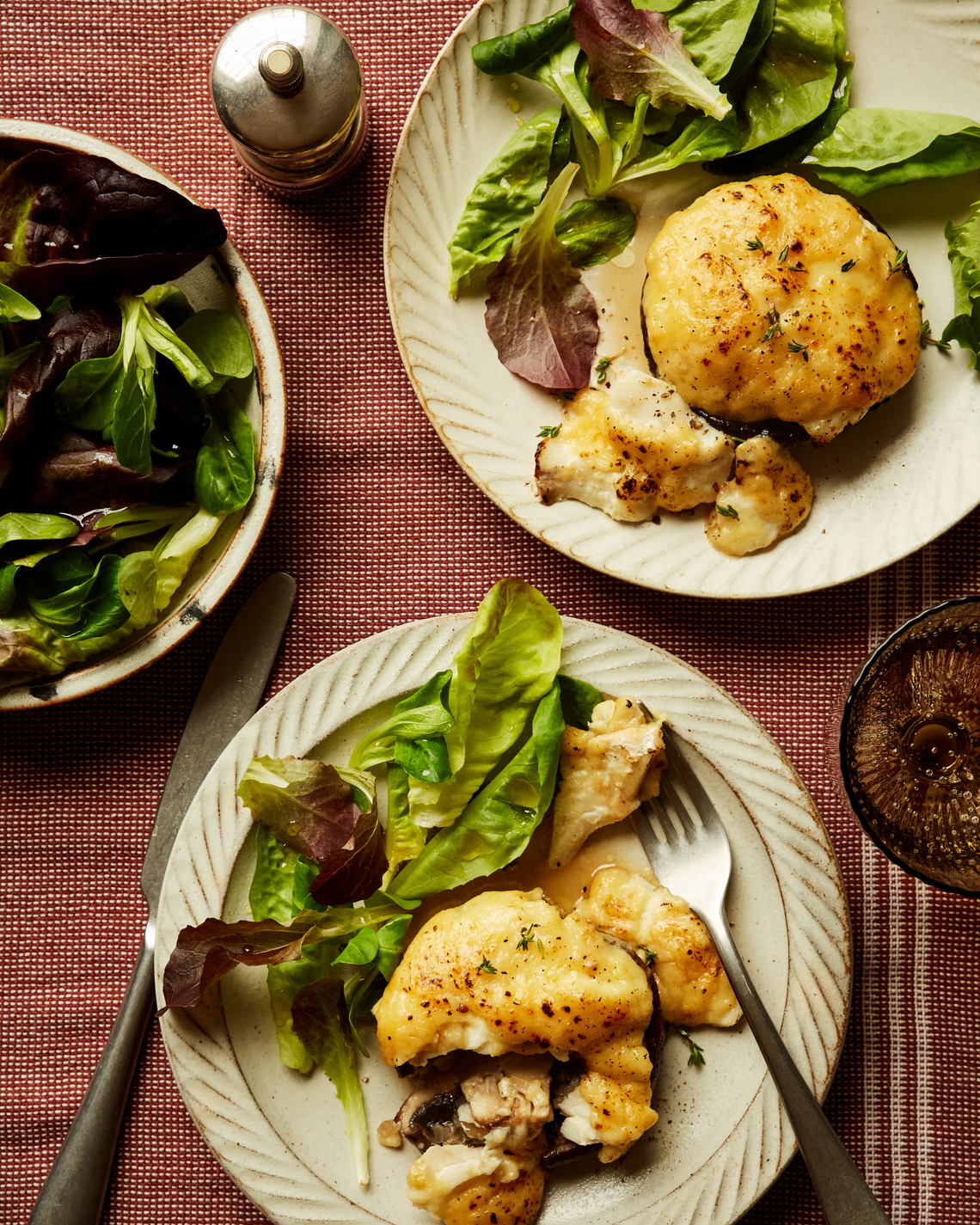
Poached haddock and roast portobello mushroom rarebit
Lorem ipsum dolor sit amet, consectetur adipiscing elit. Suspendisse ac libero augue. Donec vitae orci eget nunc faucibus faucibus. Duis erat est, efficitur nec metus id, luctus dapibus augue. Nunc faucibus enim velit, at suscipit mi tincidunt ut. Nam porttitor, erat in ultrices tempor, arcu enim condimentum diam, quis euismod ipsum velit sit amet ante.
Prep 15 min
Cook 45 min
Serves 4
500ml full-fat milk
2 bay leaves
1 sprig fresh thyme
Sea salt and black pepper
400g haddock fillet, skinned and pin-boned
For the rarebit mix
25g unsalted butter
25g plain flour
100ml dry cider
150g mature cheddar, grated
1 tsp Worcestershire sauce
1 tsp English mustard
Sea salt, to taste
1 pinch cayenne pepper
1 sprig fresh thyme, leaves picked, plus a little extra to serve
For the mushrooms
4 large portobello mushrooms, outer skins and stalks removed
1 shallot, peeled and chopped
1 sprig fresh thyme, leaves picked
A drizzle of olive oil
4 tsp white-wine vinegar
40g unsalted butter
To make the rarebit mix, put the butter in a saucepan and heat gently until melted. Add the flour, cook, stirring, for two minutes, then gradually pour in the cider, stirring all the time. Once all the cider has been incorporated, turn down the heat and cook for five minutes more. Stir in the cheese until melted, then add the Worcestershire sauce and mustard. Taste for seasoning, adding salt, cayenne pepper and thyme as required, and mix well.
Line an oven tray with baking paper and spread the rarebit mix on to it in an even, roughly 1cm-thick layer. Cover the surface with a second sheet of baking paper, to stop a skin forming, then leave to cool.
Heat the oven to 200C (180C fan)/390F/gas 6. Arrange the mushrooms upside down in a baking dish, sprinkle over the chopped shallot and thyme, then drizzle with olive oil and the vinegar. Place a knob of butter on each mushroom, then bake for 20 minutes. Remove and leave to cool.
To poach the haddock, put the milk, bay leaves, thyme and a pinch of salt in a wide pan and bring to a simmer. Carefully lay in the haddock, leave to poach for five minutes, then lift out the fish, transfer to a tray and leave until cool enough to handle.
Meanwhile, heat the grill to a medium setting. Flake all the fish and arrange it on top of the mushrooms. Cut out four circles of the set rarebit mix to the same diameter as the mushrooms, then lay one on top of each piece of fish to cover it. Season with black pepper, then grill for two to three minutes, until nicely coloured. Serve immediately, scattered with a few more fresh thyme leaves and perhaps with some dressed salad leaves on the side.
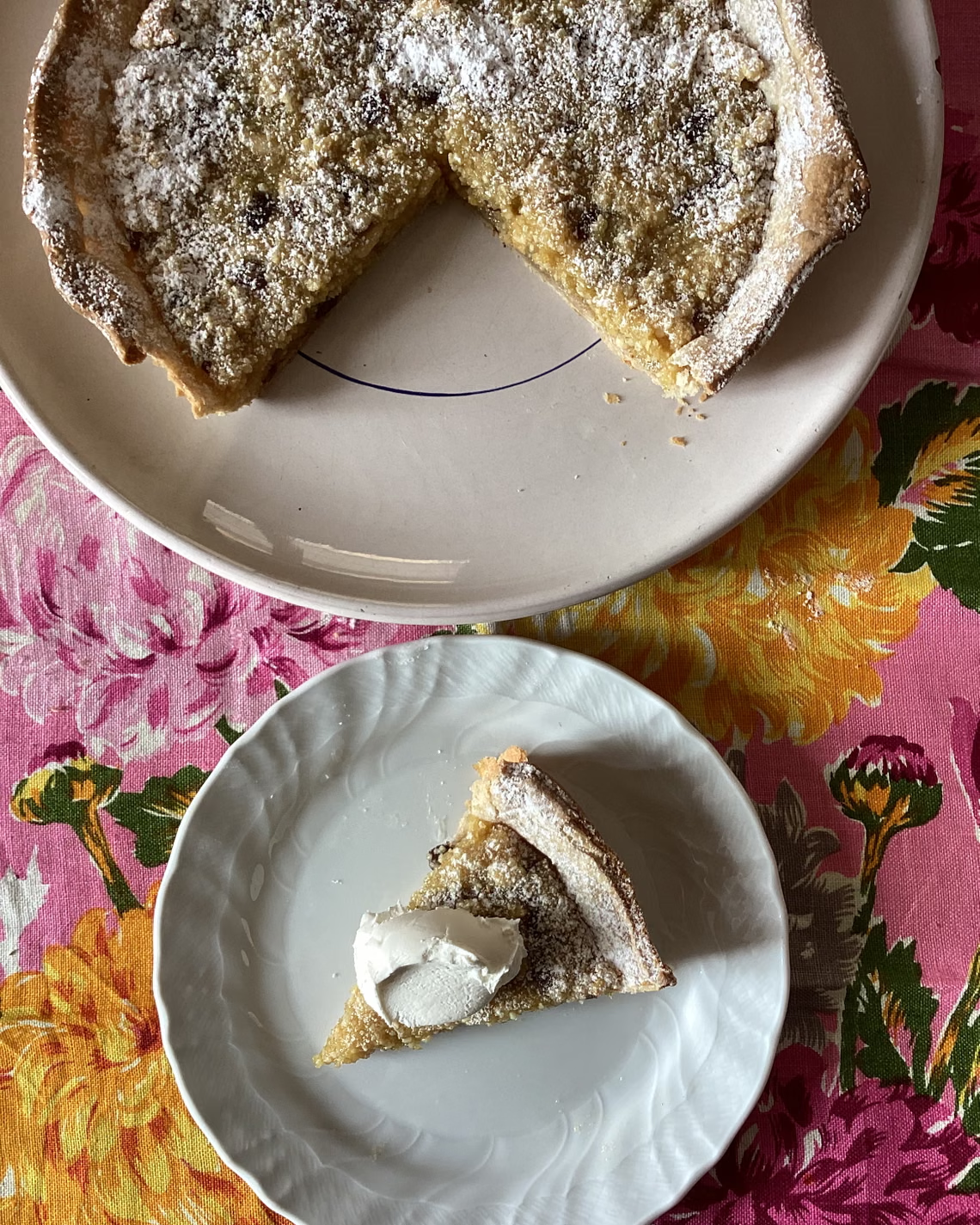
Almond and lemon spiced treacle tart
Lorem ipsum dolor sit amet, consectetur adipiscing elit. Suspendisse ac libero augue. Donec vitae orci eget nunc faucibus faucibus. Duis erat est, efficitur nec metus id, luctus dapibus augue. Nunc faucibus enim velit, at suscipit mi tincidunt ut. Nam porttitor, erat in ultrices tempor, arcu enim condimentum diam, quis euismod ipsum velit sit amet ante.
Serves 6-8
100g butter
200g plain flour, plus extra for dusting
1 tsp salt
3 tsp caster sugar
400g golden syrup or honey
50g sultanas
30g pine nuts
Finely grated zest of 1 unwaxed lemon, plus 2 tbsp lemon juice
1 tsp ground cloves
60g butter
100g ground almonds
100g soft white breadcrumbs
1 egg white, beaten until frothy but not stiff
Icing sugar, for dusting
Cream, or mascarpone, to serve
Make the pastry by rubbing (or pulsing) the butter into the flour until the mix resembles fine breadcrumbs, then add the salt, sugar and just enough cold water to bring everything into a malleable but firm ball. Wrap and chill for one hour.
Working on a lightly floured surface, roll the pastry into a circle a little larger than a 23cm tart tin (ideally loose-bottomed), then lift and press it into place, leaving a slightly overhang. Put a circle of baking paper in the centre, weigh it down with dry rice or baking beans, then bake at 180C (160C fan)/350F/gas 4 for about 15 minutes, until the pastry is firm. Remove the rice/baking beans and paper and bake for another five minutes, until the pastry is light golden brown and biscuity.
Working in a pan, warm the golden syrup or honey until liquid, then add the sultanas, pine nuts, lemon zest and juice, ground cloves, butter, ground almonds and breadcrumbs. Mix in the frothy egg white, then pour into the tart case and return to the oven for 15 minutes, until the filling feels firm and the edges are deep golden.
Remove and leave to cool before dusting with icing sugar and serving in slices with cream.
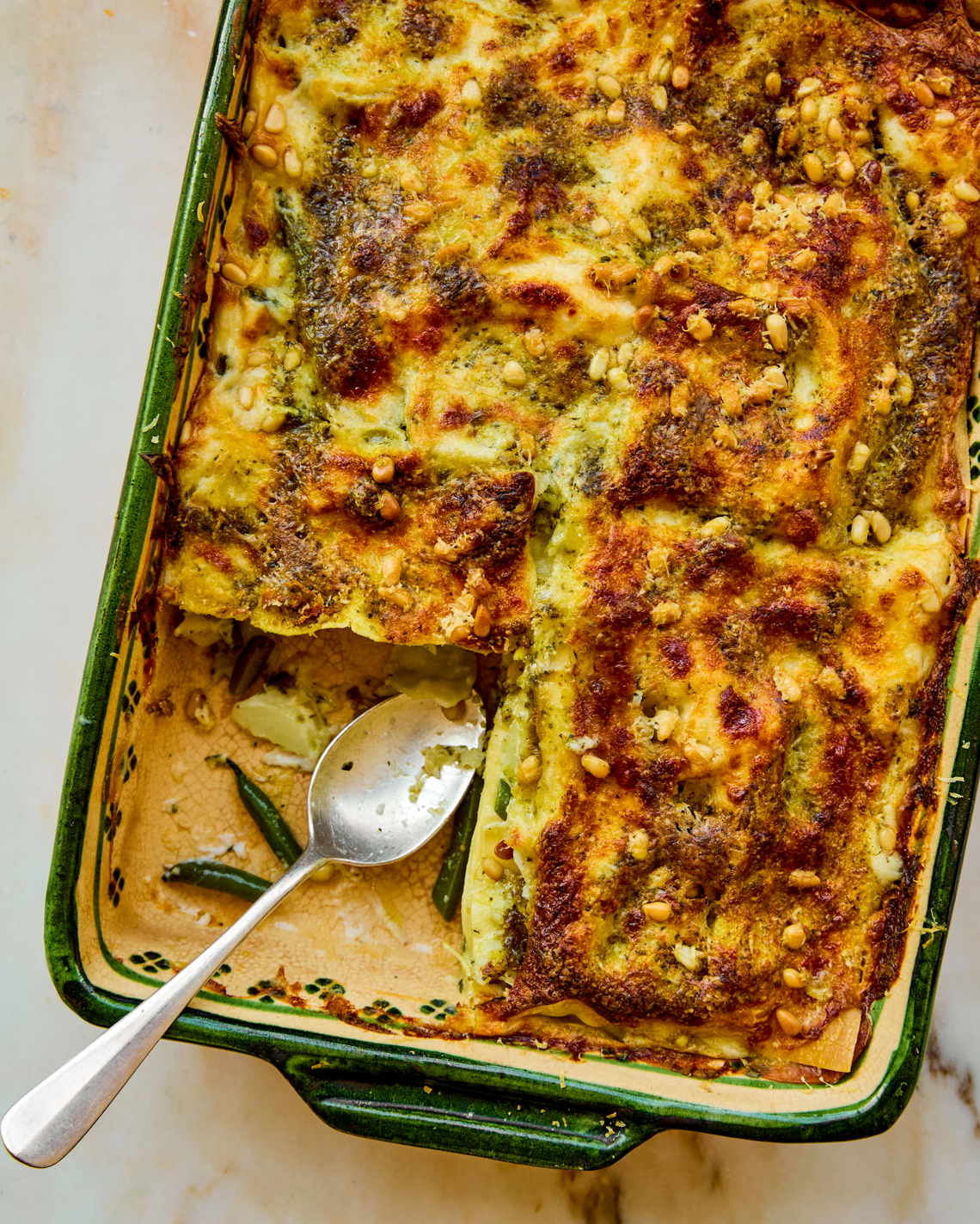
Ligurian potato and pesto lasagne
Lorem ipsum dolor sit amet, consectetur adipiscing elit. Suspendisse ac libero augue. Donec vitae orci eget nunc faucibus faucibus. Duis erat est, efficitur nec metus id, luctus dapibus augue. Nunc faucibus enim velit, at suscipit mi tincidunt ut. Nam porttitor, erat in ultrices tempor, arcu enim condimentum diam, quis euismod ipsum velit sit amet ante.
Prep 15 min
Cook 1 hr 15 min
Serves 6
300g green beans, trimmed
500g small waxy potatoes, peeled and thinly sliced
300g fresh lasagne sheets (about 8 large sheets)
50g parmesan (or vegetarian alternative), grated
1 small handful pine nuts
For the pesto
50g pine nuts
1 plump garlic clove, peeled
25g parmesan (or vegetarian alternative), finely grated, plus extra to serve
2 large handfuls basil leaves
200ml olive oil
Salt and black pepper
For the bechamel
50g butter
50g plain flour
600ml whole milk
1 parmesan rind, if you have it (optional)
Freshly grated nutmeg
First make the pesto. Toast the pine nuts in a dry frying pan for a few minutes, until golden all over, then tip into a food processor with the garlic, parmesan, basil and half the oil. Blitz to a paste while slowly pouring in the rest of the oil, until the pesto is pale green and creamy. Season to taste, then scrape into a bowl (cover with extra oil if making ahead).
Now for the bechamel. Melt the butter in a saucepan, stir in the flour and cook gently for a couple of minutes. Pour in the milk bit by bit, stirring between each splash, until you’ve got a smooth, creamy sauce. Add the optional parmesan rind, leave the sauce to bubble gently for a few minutes, then season with salt, pepper and nutmeg to taste.
Bring a large pan of salted water to a boil. Drop in the green beans, simmer for three to four minutes, until just tender, then scoop out with a slotted spoon and set aside. In the same water, simmer the potato slices for five or six minutes, until just cooked through, then drain.
Heat the oven to 210C (190C fan)/410F/gas 6½. Spoon a little bechamel over the base of a roughly 20cm x 30cm ovenproof baking dish and top with a layer of lasagne sheets. Drizzle over a generous spoonful of pesto, then scatter on a few green beans. Add a layer of sliced potatoes and some grated parmesan, seasoning lightly as you build up the dish. Repeat with more pasta, a little bechamel, more pesto and veg until the beans and potatoes are used up, but you still have plenty of bechamel and pesto left over. . Swirl the remaining pesto and bechamel over the top layer of pasta, then scatter on the remaining parmesan and the untoasted pine nuts.
Bake for 25-30 minutes, until golden and bubbling, then remove and leave to sit for five to 10 minutes before cutting the lasagne into squares.
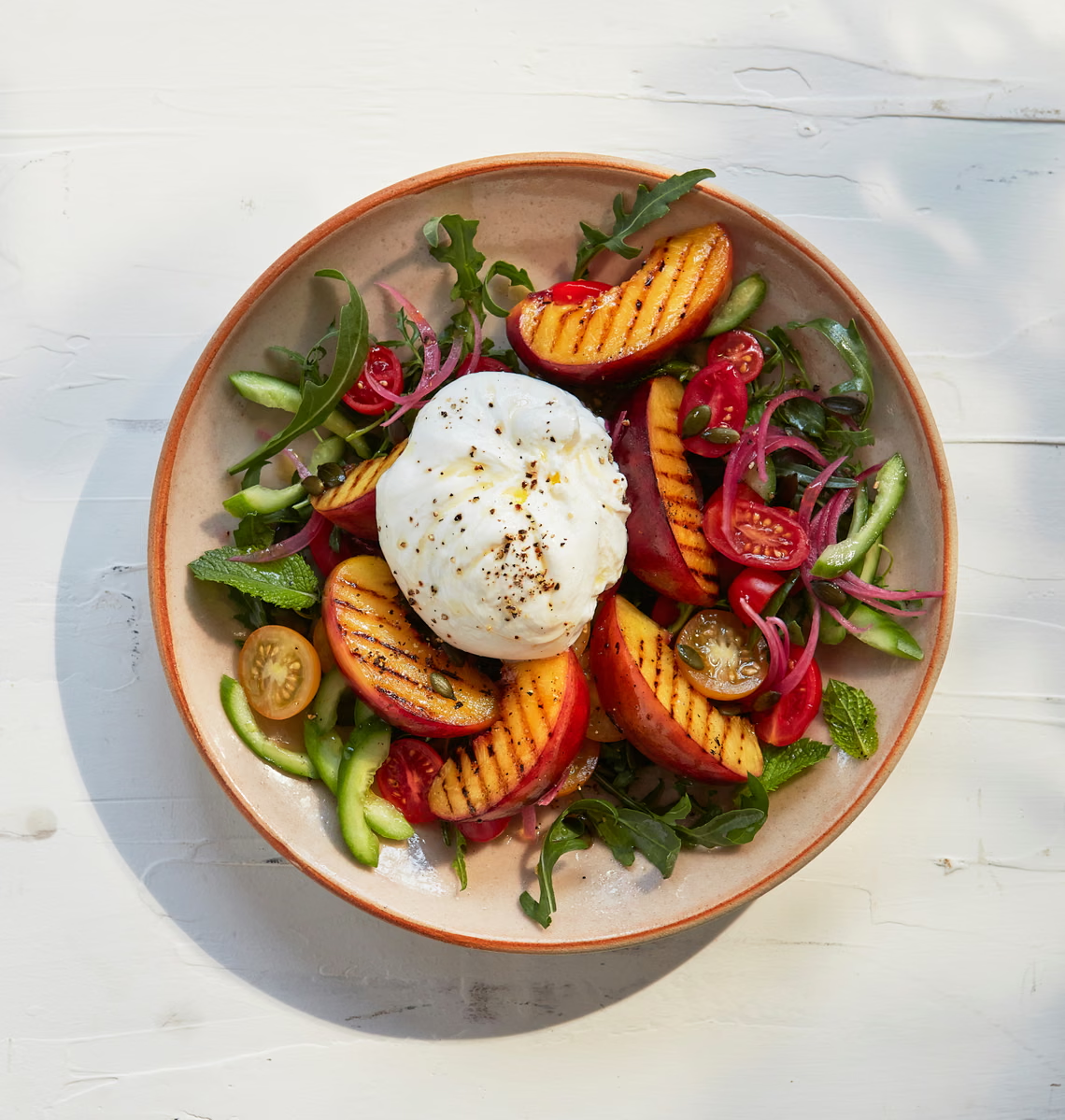
Grilled nectarine and burrata salad with pickled onions, tomato and mint
Lorem ipsum dolor sit amet, consectetur adipiscing elit. Suspendisse ac libero augue. Donec vitae orci eget nunc faucibus faucibus. Duis erat est, efficitur nec metus id, luctus dapibus augue. Nunc faucibus enim velit, at suscipit mi tincidunt ut. Nam porttitor, erat in ultrices tempor, arcu enim condimentum diam, quis euismod ipsum velit sit amet ante.
Prep 35 min
Cook 10 min
Serves 4
1 red onion,peeled and finely sliced
2 tbsp good-quality white wine vinegar
2 tsp caster sugar, or honey
Salt and pepper
40g pumpkin seeds
2 not-too-ripe nectarines
4-5 tbsp extra virgin olive oil
1 cucumber, cut in half lengthways, deseeded and cut into diagonal chunks
300g baby yellow or red tomatoes, halved
2 big handfuls mint leaves, roughly chopped
80g rocket
Juice of ½ lemon
250g burrata
Put the onion in a small bowl, add the vinegar and caster sugar, and toss to coat. Season and set aside.
Tip the pumpkin seeds into a small frying pan set over a medium heat and toast for a few minutes, shaking the pan every now and then, until lightly toasted all over. Tip out on to a plate and set aside.
Put a griddle pan on a medium-high heat. Run a sharp knife around the seam of the nectarines, pull them in half and gently remove and discard the stones without damaging the flesh. Cut each half into quarters, then put in a bowl, toss with a tablespoon of oil and season. When the griddle is smoking hot, grill the nectarine slices for a few minutes on each side, until char marks appear but they are still holding their shape (you can also do this under a hot grill).
Put the cucumber, tomatoes, mint and rocket in a large bowl, squeeze over the lemon juice, drizzle with a few tablespoons of oil and season well. Toss gently, then arrange on a platter or individual salad plates.
Break open the burrata and tear it into pieces over the salad, tucking in the nectarine slices as you do. Scatter over the pickled onions, dress with their pickling liquor and season the lot with freshly ground black pepper, a little sea salt and a final drizzle of your best olive oil. Sprinkle with the pumpkin seeds and eat at once.